
TransformingSimulation development
FLAMES Simulation Framework
FLAMES® is a commercial off-the-shelf (COTS) software framework for developing custom virtual and constructive simulations and interfaces between live, virtual, and constructive (LVC) simulations.
By providing a proven, full-featured simulation framework, FLAMES® eliminates the need to develop common simulation infrastructure from scratch, allowing teams to focus on software unique to their requirements. This approach accelerates development, reduces costs and technical risk, and simplifies ongoing maintenance while providing the flexibility to adapt as simulation needs evolve.

FLAMES
FLAMES provides the essential infrastructure for simulation development, including scenario creation and execution, database management, visualization, development tools, and interfaces to external systems.
Unlike traditional simulation applications, FLAMES separates its core framework from the software that models real-world systems. All modeling software resides in independent component plugins, allowing engineering teams to develop and customize simulations without modifying the underlying framework.
FLAMES dynamically loads component plugins at startup, enabling different combinations to support distinct simulation requirements. This modular approach allows teams to reuse existing components, streamline development, and create multiple simulations using the same proven framework.
Smarter Simulation Development
Rather than building simulation infrastructure from scratch, FLAMES provides a proven foundation that allows engineering teams to focus on developing the software needed to simulate the real-world systems specific to their programs. Its modular architecture, reusable components, and established framework help reduce development effort, control costs, and deliver more capable simulations with greater confidence.
Reduce Development Time
FLAMES provides much of the software required for simulation development, eliminating the need to develop, test, and maintain these capabilities independently. Repositories containing complete source code for component classes that simulate real-world systems further reduce development effort, allowing teams to reuse or modify existing software to meet program-specific requirements.
Maximize Software Reuse
FLAMES enables component plugins to be reused across multiple simulations using the same underlying framework. By combining existing plugins in different configurations, engineering teams can efficiently develop new simulations, reduce redundant development, and extend the value of their software across programs.
Reduce Program Risk
Developing complex simulations from scratch introduces significant technical, financial, and schedule risks, often resulting in systems that fail to meet their intended requirements. FLAMES reduces these risks by providing a mature, extensively tested framework with a defined execution model. Its proven architecture reduces development uncertainty and provides a reliable foundation for complex simulation programs.
Deliver More Capability from Day One
With more than 35 years of continuous development and use in over 100 simulation programs, FLAMES incorporates a comprehensive set of capabilities refined through extensive real-world application. Engineering teams benefit from this accumulated experience immediately, gaining access to a comprehensive framework for developing custom simulations that support their requirements while adapting to future simulation needs.
From the training room to the test range, FLAMES gives defense teams one proven foundation for every simulation they build.
One Framework. Multiple Missions.
From training and mission rehearsal to systems engineering, operational analysis, and wargaming, FLAMES provides a flexible foundation for developing simulations across a broad range of defense applications. Its modular architecture allows organizations to address distinct operational requirements while leveraging a common, proven framework.
C4I Training Simulations
Develop simulations that support command, control, communications, and intelligence (C4I) operator training. FLAMES enables the modeling of communications networks, large-scale air, land, and sea operations, and interfaces with real-world systems to create realistic, mission-relevant training environments.
Systems and Engineering Analysis
Evaluate system performance and operational effectiveness through simulations tailored to specific analytical requirements. FLAMES supports high-resolution time-step simulations, aggregated long-duration analysis, parametric trade studies, and multiple-run Monte Carlo analysis to inform engineering decisions and assess system capabilities.
Mission Planning and Rehearsal
Transform imported planning data into executable simulation scenarios that support interactive mission rehearsal. FLAMES enables teams to evaluate operational plans and rehearse missions shortly after planning is complete, improving preparation and supporting informed decision-making.
Interactive and Distributed Training
Create synthetic training environments that place simulated entities under direct human control. FLAMES-based simulations can connect with virtual simulators and real-world systems to support individual, collective, and distributed training across complex operational scenarios.
Test and Evaluation
Support system testing with controlled, repeatable simulation scenarios that interface directly with real-world systems. FLAMES-based simulations can also integrate with live test range systems, extending range capabilities and supporting more comprehensive test and evaluation activities.
Wargaming and Decision Support
Develop simulations that examine complex operational situations, explore alternative courses of action, and support strategic decision-making. FLAMES accommodates land, air, and sea operations, enabling organizations to configure wargaming environments around specific mission objectives and analytical requirements.
FLAMES Products
The FLAMES product family provides the software, development tools, and supporting capabilities needed to build and execute custom simulations. From creating specialized components to managing scenarios and extending functionality, each product supports a different aspect of simulation development within a common framework.
Developer
FLAMES Developer is the software development kit (SDK) and the tools needed to create component plugins containing classes that simulate the behavior of real-world systems. Engineering teams can develop simulation components tailored to specific program requirements while extending the functionality of the FLAMES Engine.
FLAMES Developer licenses are available at no cost and include a free trial version of the FLAMES Engine for evaluation and software development.
Engine
FLAMES Engine provides the applications needed to create, execute, visualize, and control simulation scenarios. Its integrated capabilities support scenario development and execution while providing the tools needed to manage complex simulation environments.
The FLAMES Engine dynamically loads selected component plugins, enabling teams to configure simulations around specific systems, operational conditions, and program objectives. Different combinations of plugins can be used to create distinct simulations without changing the underlying FLAMES software.
Options
FLAMES Options expand the functionality of the FLAMES Engine to support specialized simulation, visualization, analysis, and interoperability requirements.
Available optional products include:
- Unreal Engine Option
- Enhanced Analysis Option
- Distributed Interactive Simulation (DIS) Option
- High Level Architecture (HLA) Option
- Checkpoint and Restart Option
- Common Image Generator Interface (CIGI) Option
- Network Database Option
Content
FLAMES Content provides ready-to-use component plugins, example scenarios, and supporting documentation that help teams become productive without developing any new software. These resources provide a practical starting point for creating simulations, exploring capabilities, and addressing specific program requirements.
Many content packages also include source code for component classes, allowing developers to modify existing functionality or create new components using the FLAMES Component Copier.
Create An Integrated Synthetic Environment
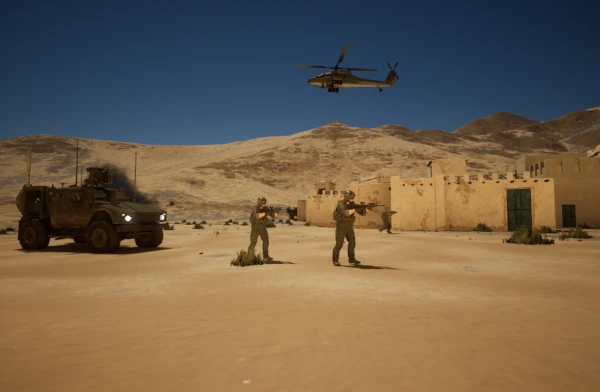
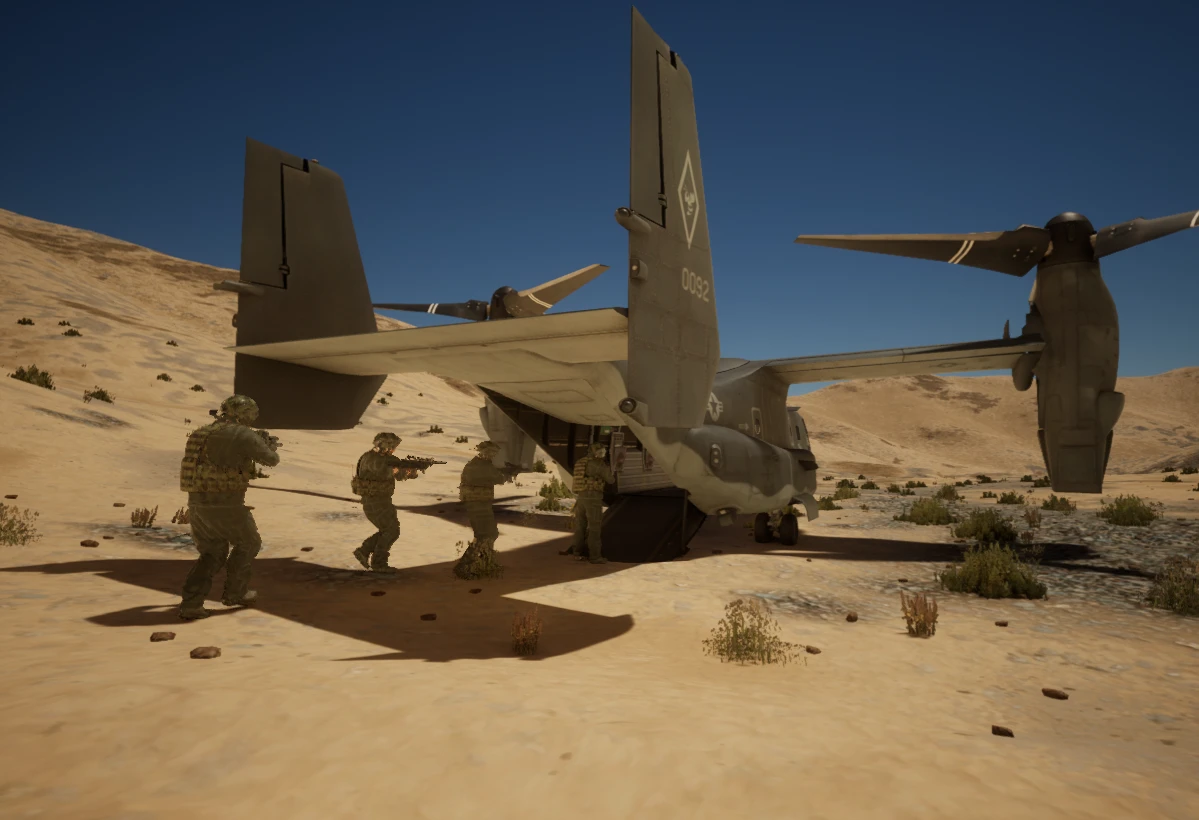
The FLAMES Unreal Engine Option allows games developed using Unreal Engine to be directly integrated into FLAMES-based simulations, combining advanced 3D visualization with powerful constructive simulation capabilities. Data is automatically shared between the simulation and the game to create a single, shared synthetic environment, making the capabilities of both FLAMES and Unreal Engine available within a single application.
Supporting FLAMES Autonomous Units, FLAMES Hybrid Units, and FLAMES Surrogate Units, this optional integration enables FLAMES and Unreal to work together to simulate movement, behaviors, sensors, weapon systems, command and control, and other mission-critical functions. The result is a flexible, immersive environment that supports complex scenarios and evolving simulation requirements.